List All News ArticlesPanel on "Inclusive Peace" was held at EMU
Published Date: Wednesday, 22 October 2025
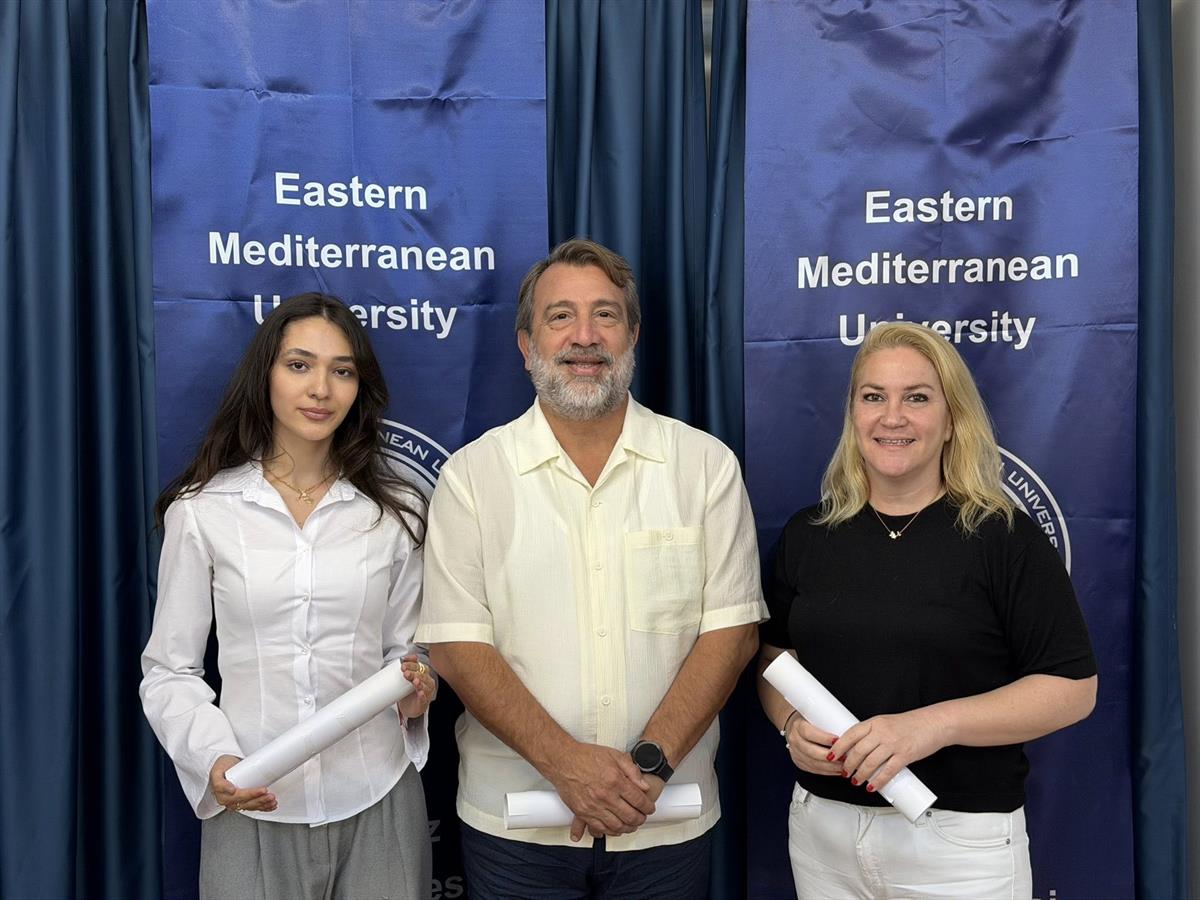
A panel titled “Inclusive Peace” was organized in collaboration with the Eastern Mediterranean University (EMU) Cyprus Policy Center (KPM) and the Department of Political Science and International Relations. The event began with an opening speech by Prof. Dr. Ahmet Sözen, Chair of EMU KPM and the Department of Political Science and International Relations. Prof. Dr. Sözen introduced the panel speakers, Dr. İpek Borman and Aysel Rahmanova, a student of the International Relations Department, and provided a brief overview of the panel's content.
In his remarks, Prof. Dr. Sözen highlighted the role of Track II diplomacy in conflict resolution processes and explained how it differs from Track I diplomacy conducted by official representatives such as heads of state and diplomats. He emphasized the importance of considering the needs and interests of all stakeholders in conflict resolution efforts. Prof. Dr. Sözen also referred to the United Nations Security Council Resolution 1325 (UNSCR 1325), underscoring the necessity of including marginalized groups in peace processes.
Following Prof. Dr. Sözen, EMU International Relations student Aysel Rahmanova spoke about her internship experience in the Nicosia buffer zone last summer and the insights she gained from studying conflict resolution practices in Northern Ireland and South Africa. Rahmanova evaluated the impact of Track II diplomacy in these contexts and discussed the extent to which the lessons learned could be applied to the Cyprus Problem. She emphasized key elements observed in these cases, such as international ownership, conditional inclusivity, technical drafting mechanisms, and civil society participation.
The panel's final speaker, Dr. İpek Borman—who served as a member of the Turkish Cypriot negotiation team for ten years—delivered a presentation on the Cyprus Problem and gender politics. Dr. Borman stated that gender is a critical concept for understanding power relations and drew attention to the underrepresentation of women in high-level politics in Cyprus. She further noted that gender-sensitive and inclusive negotiation processes have yet to be developed. Criticizing the prioritization of security issues over gender equality concerns, Dr. Borman stressed the need for the United Nations to more strongly pursue efforts to mainstream gender across all policies.